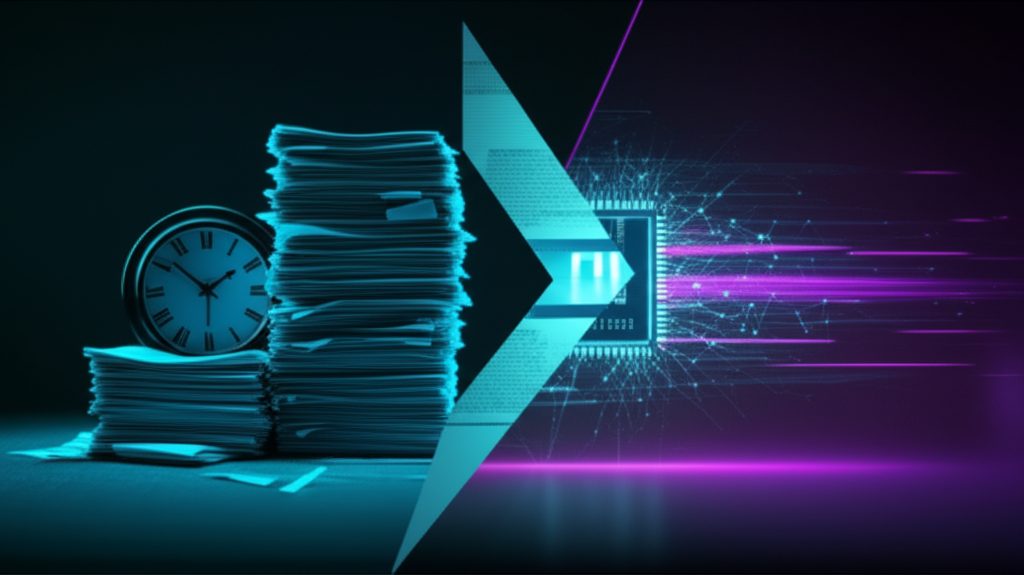
The Problem: Mortgage’s $10,000 Paper Problem
The mortgage industry has a dirty secret. Despite decades of digitization efforts, the average loan still takes 51 days to close and costs over $10,000 to originate.
Why? Because the middle and back office remain stuck in paper-based, human-dependent workflows:
- Loan officers manually enter data from physical documents
- Processors chase missing information across multiple systems
- Underwriters review hundreds of pages per loan
- Compliance teams audit paper trails
This isn’t inefficiency—it’s structural. The mortgage process was designed for a world where humans were the only processors, paper was the only medium, and 45-60 day cycles were acceptable.
Tavant’s Insight: Don’t Replace—Wrap
When Tavant launched TOUCHLESS® in 2018, they made a critical architectural decision: don’t replace legacy systems—wrap them.
The Integration Philosophy
Traditional Approach:
  New Platform → Replace LOS → Replace POS → Replace CRM → 2+ years, $10M+

Tavant's Approach:
  TOUCHLESS → Wrap existing LOS/POS/CRM → Days to weeks, immediate ROI
This wasn’t just technical pragmatism—it was business survival. Mortgage lenders had invested decades in their Loan Origination Systems (LOS). Asking them to rip-and-replace was a non-starter.
Lesson 1: Meet legacy where it is.
The Agentic AI Architecture
Tavant’s platform isn’t a chatbot or a document scanner—it’s an agent-based system that orchestrates multiple AI capabilities:
MAYA: The AI Agent
Borrower Query → MAYA (Orchestrator)
                       ↓
              ┌────────┼────────┐
              ↓        ↓        ↓
          Document  Income   Credit
          Agent    Agent    Agent
              ↓        ↓        ↓
              └────────┼────────┘
                       ↓
              Decision + Explanation
Each “micro-agent” handles a specific domain:
- Document Agent: Multi-OCR strategy, classification, extraction
- Income Agent: Employment verification, calculation, anomaly detection
- Credit Agent: Score analysis, debt-to-income, risk assessment
- Collateral Agent: Property valuation, appraisal analysis
Key insight: The orchestrator doesn’t just route—it explains. Every decision is logged immutably using Digital Ledger Technology, creating an audit trail that satisfies regulators.
Technical Innovations That Mattered
1. Multi-OCR Strategy
One OCR engine isn’t enough. Tax returns, pay stubs, bank statements, and appraisal reports all have different formats and quality levels.
Tavant’s solution: A network of OCR providers with intelligent selection.
Document → OCR Engine A (tax forms specialist)
        → OCR Engine B (handwriting expert)
        → OCR Engine C (low-quality scan recovery)

Intelligent Selector → Best extraction wins
Result: Higher accuracy than any single OCR, without custom development for each document type.
2. Policy-as-Code Underwriting
Underwriting rules are complex, lender-specific, and frequently updated. Traditional systems hardcode these rules, creating maintenance nightmares.
Tavant’s approach: Express underwriting policies as executable code.
# Example: Debt-to-Income Rule
rule: dti_threshold
conditions:
  - credit_score >= 740: dti_max = 0.45
  - credit_score >= 680: dti_max = 0.43
  - credit_score < 680: dti_max = 0.36
action:
  if dti_calculated > dti_max:
    flag: "DTI_EXCEEDS_THRESHOLD"
    explanation: "DTI exceeds threshold for credit score"
Benefit: Business users can modify rules without engineering cycles. Compliance can audit exactly what rules were applied to each loan.
3. Immutable Audit Trail
Regulators require explainability. Fair lending laws demand proof that AI didn’t discriminate.
Tavant’s solution: Every AI decision is recorded in an immutable ledger.
Loan #12345 Decision Log:
├── 2026-02-28 14:23:15 - Document Agent classified W2
├── 2026-02-28 14:23:18 - Income Agent calculated $125,000/year
├── 2026-02-28 14:23:22 - Credit Agent pulled score: 742
├── 2026-02-28 14:23:25 - DTI Rule evaluated: PASS
├── 2026-02-28 14:23:30 - Underwriter Agent: APPROVE
└── 2026-02-28 14:23:32 - MAYA: Clear to Close
This isn’t just compliance—it’s trust. Lenders, borrowers, and regulators can all see exactly what happened and why.
The Results: Measured, Not Marketing
After 8 years of deployment across 400,000+ borrowers:
| Metric | Before | After | Improvement |
|---|---|---|---|
| Time to Clear-to-Close | 45-60 days | 5-7 days | 85% reduction |
| Cost per Loan (Processing) | $3,500 | $800 | 77% reduction |
| Underwriter Productivity | 5 loans/day | 22 loans/day | 4.5x increase |
| Routine Inquiries Deflected | 0% | 80% | 80% automation |
| Refinance Application Time | 15 days | 10 days | 33% reduction |
These aren’t pilot numbers—they’re production metrics from real lenders.
Lessons from 8 Years of AI Deployment
Lesson 1: Integration Speed Determines Adoption
“Touchless Lending services can be integrated in days or weeks rather than months.”
If AI requires a 12-month implementation, it won’t happen. Mortgage lenders operate on razor-thin margins—they can’t afford disruption.
The API Store approach: Lenders can consume individual services (Document, Income, Credit, Collateral) independently without buying the full platform.
Lesson 2: Explainability Is Non-Negotiable
“These AI agents need to be provisioned like people. They need to exist as their own entity. What data are they pulling in to make their decision? What is their reasoning?”
— Sundeep Mathur, VP of Fintech at Tavant
In regulated industries, AI that can’t explain itself is AI that can’t be deployed.
Lesson 3: The Human Escalation Path
MAYA handles 80% of routine inquiries automatically. But when a borrower faces hardship and needs a loan modification:
“They want to log in at 2 AM and educate themselves, so they don’t need to have embarrassing conversations. MAYA can explain all about what goes into a loan modification… in plain language.”
AI doesn’t replace humans—it prepares borrowers for human conversations.
Lesson 4: Behavioral Signals Create New Revenue
The Servicing Portal doesn’t just collect payments—it watches for refinance and HELOC signals:
Borrower uses refinance calculator → Signal to Loan Officer
Borrower checks HELOC eligibility → Marketing campaign triggered
Borrower views second mortgage options → Cross-sell opportunity identified
This creates a Servicing → Origination loop that didn’t exist before.
The Broader Pattern: Legacy AI Transformation
Tavant’s success reveals a playbook for any legacy industry:
1. Identify the “Paper River”
Every legacy process has document flows that create bottlenecks. These are prime automation targets.
2. Wrap, Don’t Replace
Legacy systems hold institutional knowledge. Build AI layers on top, not replacements underneath.
3. Agent-Based Architecture
Domain-specific agents (Document, Income, Credit) are easier to build, test, and audit than monolithic AI.
4. Immutable Logging from Day One
Regulatory trust requires audit trails. Build them into the architecture, not bolted on afterward.
5. Measure Everything
Cost per loan. Time to close. Deflection rates. Productivity gains. These metrics sell the platform to skeptical stakeholders.
What This Means for Investors
Tavant’s 8-year journey shows that AI transformation in legacy industries is measured in years, not months.
But the companies that persist through the integration challenges achieve:
- Defensible moats (deep integration, regulatory trust)
- Network effects (multi-OCR, agent ecosystems)
- Pricing power (77% cost reduction commands premium pricing)
The next wave of AI unicorns won’t be horizontal platforms—they’ll be vertical agents that quietly run legacy industries.
For the Living Platform Context
What can a living platform learn from Tavant?
| Tavant Pattern | Living Platform Application |
|---|---|
| Servicing → Origination loop | Tenant → Renewal/Upgrade loop |
| MAYA 24/7 assistance | AI concierge for resident queries |
| Behavioral signal detection | Usage patterns → personalized offers |
| Immutable audit trail | Compliance-ready tenant interactions |
| Policy-as-Code | Lease rules, renewal logic as code |
The infrastructure for “touchless” living experiences already exists. The question is who will build the MAYA for apartments.
Sources: Tavant, HousingWire, Business Wire, TechEdge AI